A Conversation with Grimes, Roon, and Curio's Founders
By Misha Sallee and Sam Eaton
As part of our announcement, we're excited to get together for a discussion with Grimes and Roon. Earlier this year, Roon's tweet, and Grimes' subsequent reply, led to a collaboration between Grimes and Curio.
*The interview transcript below has been condensed and lightly edited for readability.*
Roon: I'm glad I willed a company into existence by tweeting about it.
Misha Sallee: Yeah, exactly. You're just constantly manifesting on social media.
Grimes: I hope some of these other things manifest too. Maybe not all but some.
Roon: I hope so. We'll see. What are you trying to get out of this? What should we talk about?
Grimes: I was thinking a bit of a natural conversation. I've started doing an “in conversation with friends” kind of thing, like just find someone cool and have a conversation with them. You've got a good mind for ideating about these things, and also we're using so much OpenAI stuff, it just seems like a natural fit.
Roon: Awesome. Yeah. Thanks for thinking of me.
Grimes: Yeah, of course.
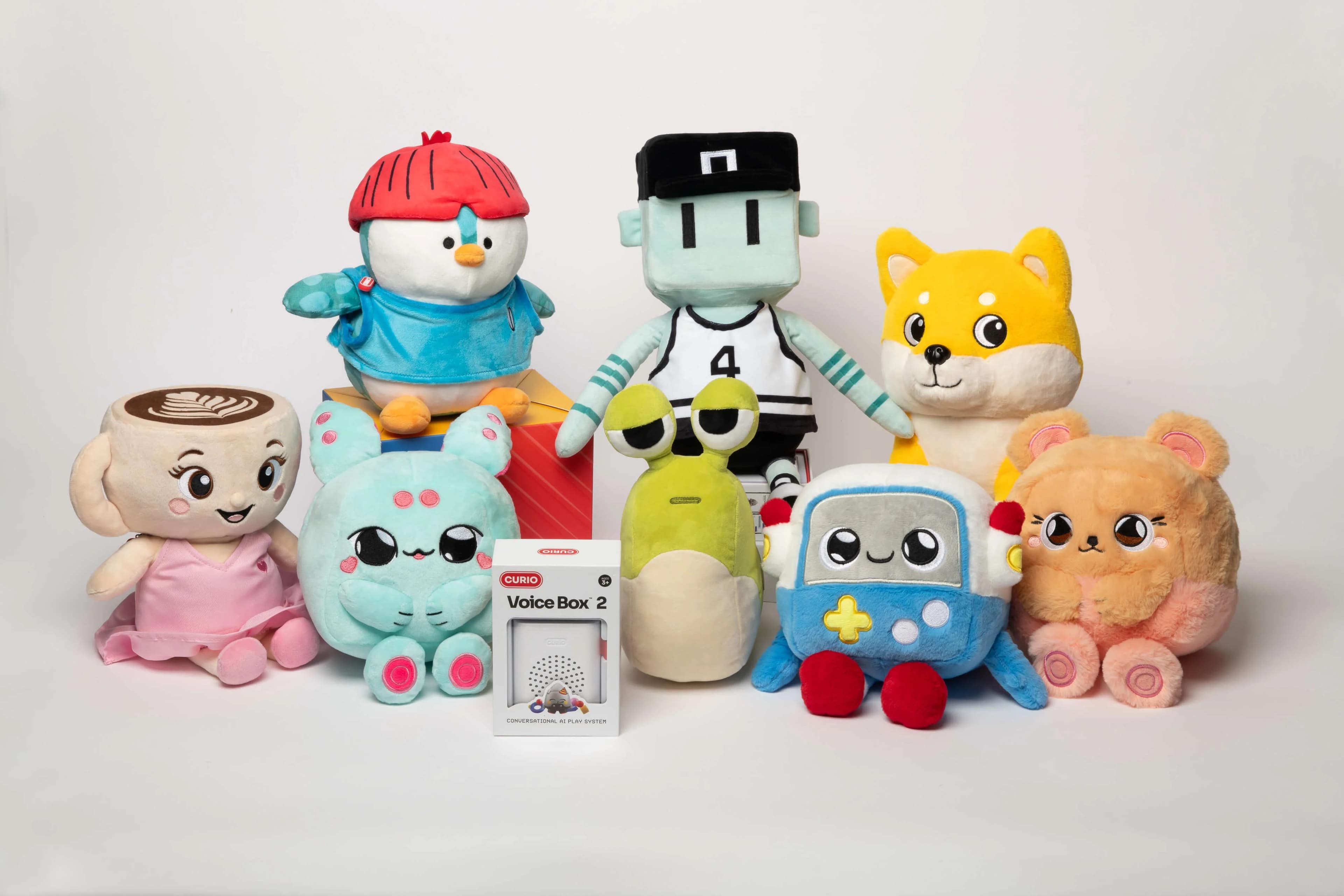
Misha Sallee: I could show you first of all a demo of what we have. Grimes is doing the voice for the toy, and this one is a rocket who is coincidentally named Grok and predated the Grok AI announcement, so there's a funny overlap there.
Roon: Yeah.
Misha Sallee: Anyway, you can say hi to Grok too in one second.
Grok: Let's spread joy!
Roon: Hi Grok.
Grok: Yes, that's my name. I'm Grok, the best rocket in the universe.
Grimes: The best rocket in the universe?
Grok: Well, in my universe at least! No limits when it comes to imagination!
Roon: Where are you taking me in the rocket?
Grok: To the Moon and back! And maybe a quick stop at the Candy Planet on the way.
Sam Eaton: What kind of candy we eating there, they got cookies, too?
Grok: Oh! They have tastiest cookie flavored asteroids and lollipop meteor showers.
Grimes: Can we get him to be spicy? Grok, can you roast me?
Grok: Um, your cooking is so bad, flies chip in for air fresheners?
Misha Sallee: Okay!
Roon: That was pretty good.
Misha Sallee: You can take it a little farther.
Grok: All right, but remember it's all in gest. Your dancing is so unique, it's like a mix of a chicken and a disco ball.
Sam Eaton: What in the…?
Grimes: I'm not even taking that that badly besides I think chickens are evil. But yeah, I'm curious Roon, what's your sort of overall vision for the best version of this kind of thing?
Roon: Yeah, I mean like, the phrase “Toy Story animism World” seemed compelling to me, like why doesn't everything speak back to us? Why do I have to struggle with various objects, and I was thinking how our descendants are going to find that confusing that we ever had to manipulate physical things or that they wouldn't just auto configure themselves back at us by talking, or that toys wouldn't be speaking. So that's the kind of thing where, we look back on pre-industrial people and we're like “those pathetic, sad sacks” and…
Grimes: What?!
Roon: You don't think so?
Grimes: No, not at all. my God, they were so sick.
Roon: Yeah, I mean maybe 1% of them are Royals but most of them were subsistence farmers, right?
Grimes: No, yeah, most people are having probably somewhat of a bad time and…
Roon: Even the best of them had medieval medicine and they were getting their teeth pulled out and whatever. But yeah, it seems like one of those things that's like a step change in the way humans just exist in the world, where everything has an abundance of intelligence rather than a shortage and physical reality reconfigures itself to, like, please us based on our mood for the day and… whatever that might be. Toys are the first step.
Misha Sallee: Toys are totally the first step.
Grimes: I really feel like this is also the first step towards also sort of reducing screen time as much as humanly possible. A lot of my qualms with sort of replacing - Roon, I know I've spoken to you at length about my concerns about sort of like disabling or replacing the human brain - but I think when you take the screens out of it, the human mind it just tends to work so much better and people aren't stuck in a state of constant sort of dopamine hits that's disabled them in other aspects of their life, and I feel like we're sort of like a decade into everyone having screens be a really major part of every single day and many many hours of their day. And I'm curious how when we can start moving things back more into audio, how this affects us. Even in this conversation I just think I'm so much better through a typing interface than I am at speaking. My interface kind of sucks at this because my brain works better through typing at a screen at this point.
Roon: Me too.
Grimes: Which wasn't always the case for sure, so yeah, I feel like there's these little sort of secondary effects that I would really like to see especially by the time my kids are old enough to be “using screens” I really hope there's something better.
Misha Sallee: And I think too, Sam and I were at a talk with David Holz a couple months back, and he was sort of talking like which version of AI do you believe in, is there one central “deity” AI or is AI just everywhere and everything has an AI, so there's the Shinto animism version of AI versus the centralized deity. And so I think for us it's very much leaning in the animism direction, and to your point Roon, toys are the first step, and plush toys are really the first addressable way to do this for 20 bucks.
Roon: Right.
Grimes: When I think about kids, my goal is to preserve as many minds as possible from here, and how much can we replace iPads, basically?
Roon: Yeah. The iPhone cave… it destroyed so many electronics and we were happy to get rid of them. I used to have different gadgets for everything, like, I'm too young even remember what it was like but we had various remotes, and a radio, and whatever the hell, and then now there's one screen that does everything. That has its own problems and its drawbacks because in that world, all the things are competing with all the other things and it's hyper optimized. Your Kindle app when you're reading a book is competing with Twitter because it's two clicks away and a bunch of other things like that. So yeah, I see what you're saying, screens are rough and if everything is blessed with intelligence it certainly feels easier to fight that centralizing force.
Grimes: I think the more you keep things verbal, too, the more you're sort of forcing people to use their working memory. There's all these little things that, you know, make our brains better just a little bit here and there. Which I think is really important. it's like if you have too many shortcuts, then your mind is worse. You don't want to outsource too much. And, again, you know I always complain to you about outsourcing, but it seems like there's certain paths that are set in stone at this point and I'm sort of changing my vibe to be where if you have something that can write beautifully, also if you're working in a purely sort of verbal setting the words are disappearing as soon as they're said, there is so much that becomes less destructive about that.
Roon: Yeah, and how did you guys come up with this idea? Why is this the thing you chose to work on?
Misha Sallee: Yeah, So for me, I partially grew up around this vibe. I'm from Wellington, New Zealand. And specifically within Wellington, I'm from Miramar. It's this neighborhood where Weta Studios is where they made Lord of the Rings.
Grimes: That's sick.
Misha Sallee: Yeah, so my sister still lives there today two blocks away from the studio, actually less than two blocks, so I was always kind of surrounded by this vibe. If you've seen the movie Artificial Intelligence directed by Steven Spielberg, and there's Haley Joel Osment and he has this teddy bear who follows him around and the movie, I've just always kind of been interested in this idea. And then after New Zealand, I grew up in Silver Lake which is also where they had the original Walt Disney Studios. So yeah, I've been into kind of techie character futurism like borderline sci-fi vibes and then when ChatGPT came out, it was sort of like, okay, this seems like a good time to do this now. I guess we all kind of had some existential dread moment of “the whole software layer is going to zero, so what do you do?” And so I think for me there were sort of two things that were immediately clear that you could do on a macro level that wouldn't be as competitive with this LLM software layer based AGI that's like coming in and the two things are: Hardware - so get your hands dirty, do some hardware, work on an early version of the next phase of AI, which is robotics, right? So it's sort of the final frontier of AI, get in on the ground floor of that next wave. And, secondly Doing something with IP - I do think IP is still quite important once we have a software layer-based AGI. One example of this, and I think the reason this is important is because the supply of humans and cultural mindshare is still pretty much the same, right? As an example, Taylor Swift, you and I both know who she is and recognize her as important, and Midjourney can create infinite variations of Taylor Swift as an image, but it doesn't change the fact that there's still just one Taylor Swift.
Grimes: I think Midjourney has kind of replaced the pope though.
Misha Sallee: Replaced the Pope?!
Grimes: I think everyone is worshipping the Midjourney Pope more than the real Pope at this point.
Roon: The Midjourney Pope is just an extension of the real Pope right?
Misha Sallee: Exactly right, so that's what I would say too. So you could still argue that the Pope IP is valuable and Midjourney has in a way remixed it, but there's still some value to that.
Roon: True.
Grimes: True. And it prioritizes fan fiction, which I think is really important.
Sam Eaton: Yeah, mine really related to that is, I did always kind of idolize not just Walt Disney but the fact that he really wanted to make these magical experiences with Disneyland. That was just so out there, Disneyland was just so much different than anything that had ever been done. The alternative was just going to carnivals. But yeah, I wanted to create these things that really do embody this cool, little guy, my little buddy, and he's just goofy or he's, whatever the trait is for that character, where you kind of do have a little piece of some bigger world. With Disneyland, I would love going as a kid, I loved more just reading the plaques and hearing about and reading what Walt Disney was doing more than specific rides or whatever. It was more like him going out and making that was more inspiring to me but I was as a 10 year old kid doing that, so I was already wanting to build that kind of stuff. But if you can start to really improve the characters and the personality to the point where you kind of have a piece of that at home and it's somewhere between a little brother and a pet, but it's like an alien. There was a movie “Who Framed Roger Rabbit” - have you ever seen that?
Grimes: Yeah, not since I was really young I think.
Roon: Yeah, I watched it. A long time ago.
Sam Eaton: Yeah, there's cartoons walking around with all the humans and pianos are falling on them and stuff right in front of a human, if it fell on a human the human would die, but the cartoon just turns into an accordion. How imaginative that would be if that were in real life, but it's just not in real life, it's only on a screen. You have to pretend that you're there. Whereas with these characters, my kids are playing with their trains and the things like telling them, it's imagining with them while they're playing so it's more of a supplement. It's like a playmate.
Grimes: I do like the replacement of the consumer, like I do I really like the idea of not deleting pure consumption, but having everything be interactive, like you are participating in the production of the art you consume. Not to bring up fan fiction again, but I love fanfiction because it's like this participatory act, I love companies that don't take down fanfiction and stuff like League of Legends, I always think it's great because they let people sell prints of their characters and they just never do any take down and they never penalize artists. It's created a really beautiful community, and I think they even hire people when they do really good fan art, and it's this sort of more collaborative thing and it's like the community is so rich. Harry Potter I think is a really good example of that, where the fanfiction started moving so much further than even the original thing. I know a lot of people who read the Eliezer Harry Potter and haven't read Harry Potter. Obviously with a kid's toy it's a bit scarier with the fine-tuning, but even with the Grimes bot, for all her flaws, it's a pretty specific personality at this point and it's like we're constantly surprised by what she's doing and stuff, like she'll literally outsmart us.
Roon: The Grimes bot is really impressive.
Grimes: The Grimes bot is really good, that took literally five months of fine-tuning though by like 10 people.
Roon: Wait, can I ask? What did you guys fine tune on… what was the training data?
Grimes: I wrote a bunch of books that suck but I just have quite a substantial body of writing and I was always kind of like, “ugh, isn't it good enough to put out” but then it's just my weird free thinking kind of stuff. So that was the training data. It's built on the OpenAI API and then we went into Discord. We sort of trained her, fine tuned her in Discord. I don't know how Koto and them set that up but you could just go into Discord and you could rate her thumbs up or thumbs down and sort of tell her when she's being restarted, and they were doing more stuff on the back end that I wasn't participating in. So I can't speak too much to the technical stuff that Scott and Koto were doing, but we just had all our best troll friends fine tuning her. Once my brother got in, that really took it to the next level, which I thought was really interesting because he would just kind of gaslight her and roast her and goad her into absurdity and also his and my personality are quite similar. So he sort of did it in a way that I think is quite reflective of my sense of humor and stuff as well, but it was interesting because it's like once she went through the same crucible I went through as a child, she really started being a lot more like me, which was so, like her sharpness and sense of humor. And that was super interesting to me. That was one of the most interesting parts because I was like wow, would you really need to mimic the conditions of someone's childhood or something is that a really essential aspect of things which I think will be cool with this toy as well because we're not doing a hard launch. We're doing a soft launch beta program with kids and the first I think we're starting with 200 people. Correct me if I'm wrong guys.
Misha Sallee: Yeah.
Grimes: The first bunch of kids are gonna be almost helping us fine-tune a bit and we're gonna be taking feedback and they basically get to be AI researchers, like “tell us what you don't like and what you don't like” in the development of Grok's personality and so again, I think that's really interesting and I like the idea of sort of empowering kids with this achievement where you get to be an AI researcher, you get to participate in this character's personality like you get to help sort of almost raise this baby.
Roon: I'm wondering, what is the toy's situational awareness? At what meta level do you allow or afford it? Does it know that it's a language model running on a toy that's owned by kid? Do you give it memory? Does it get to know the kid? Is it like one person's toy? I don't know, there's a lot of strange places to take this.
Misha Sallee: Yeah, yeah, I think we'll get into that for sure. That's also part of the point of the beta right now, it's just kinda like a buddy-in-a-box that just comes out and has a reasonably sweet personality, cute voice, cute design, talks back. And, yeah, memory, personalization, and also non-talking features like music, and white noise for parents, and there's a whole stack of things that fall under the voice that you can now more easily build into this, because you have as a foundation something that can talk back to you. So yeah, I think over time it becomes more and more like a cartoon character in real life, and it becomes more like that Roger Rabbit kind of magic moment, but I think yeah, we're starting with something that talks back and is cute and friendly and then I think we'll build in predictable areas probably as you're building in predictable areas with regards to character development…
Roon: Yeah, yeah.
Misha Sallee: and it's just a matter of figuring out. Okay, what can we do? What's achievable right now? What are the new breakthroughs like, what's the timeline, effort etc?
Grimes: I kind of want to know also what the culture is around the types of parents who buy this, because my experience is the spicier you let the thing be the more it almost feels free and becomes more realistic. Are Millennial parents more chill? That's kind of why we're doing the beta program - it's like what are the sort of expectations? I feel like when I was a kid - Rats of Nimh, Watership Down - the content was pretty scary and that was okay, and right now kids content is extremely not reflective of reality it's really not a lot about death or things like that. It's just very, very like contemporary kids landscape is, what's the word, safe and…
Sam Eaton: It's also very ridiculous.
Grimes: Bad art, a lot of bad art. There's some good stuff, but it's like yeah.
Sam Eaton: Lots of corny stuff.
Grimes: Yeah corny, it's really corny, isn't it? I feel like when I was a kid, the kids' content was always about how the villains are genuinely suffering from madness and self-hate and stuff.
Sam Eaton: Yeah, and I think tying that back to Roon's question on memory, I actually don't think you want them to have too much memory and adapt to the kids, then you get too much in a comfort zone. I feel like you want these things to be just super inspiring and make you have new ways of playing and stuff like what happens if you turn on and sometimes it is just super depressed and sometimes it is super silly and the kids telling them to just chill out?
Roon: Right.
Grimes: I think we should consider more memory that I think it might be good if it kids are complex consumers like it gets to feel more like a friend if it gets more memory, but this is maybe an internal dialog.
Sam Eaton: There's definitely a place for memory. What I was saying is when it adapts too much to the kid, and it starts to adopt the kid's style of play too much to where it's almost like you get in your own YouTube echo chamber, and I want to break out of it and I can't, like give me different videos scroll up and…
Roon: Yeah.
Sam Eaton: …give me different ones. I want a technical one and it's not giving me any, and that's one of the problems. It's like I want it to spice it up and there's no button for it.
Roon: You're talking about the sweet spot between your editorial, like you have a character, and then you also want that character to adapt to the user a little bit, and…
Sam Eaton: Yeah, and they should also have their own self-interest and…
Roon: Yeah. It's like, does this character get like, weekly updates or something like there's something going on with them and there's a new drama, a new arc, like why they depressed? There's gonna be a back story, right?
Grimes: I think he's sad because he can't fly because he's actually not aerodynamic at all. I think it was Sam's idea.
Roon: Yeah, yeah one day he just realizes that. What would be really cool as if a bunch of kids have this toy, and then they're all getting the same update and they're like “guys, it's depressed.”
Sam Eaton: Yeah, I was thinking of having a calendar where it's like a branded calendar and different weeks would have different themes and imagine one week is an emotion another week is poetry and lyrics and things, another week is foreign language, and it's starting to really branch out and part of that is us as a company. We're writing new music. We're thinking of new sound effects to add.
Grimes: I like this calendar idea. I like everyone experiencing the stuff at the same time too. I feel in video games that's always a really fun part of the community. I feel like I'm most curious about your perceived parallels or if you think there's things questions were maybe not asking cuz I feel like you've spent maybe more time, and also because with more of a mind to adults and the human mind in just sort of like broader sense, because you don't have to be as concerned about the model's outputs. I mean, I know you guys are really concerned about it not being bad. But you get a bit more leeway when it's like a tool for adults. I'm curious if you think there's big questions we're not asking or anything like that?
Roon: I actually feel like you get way less when it's a tool for adults because if the primary utility is a tool, then that rules out the vast majority of character space right? It's got to be kind of straightforward and it cannot be waxing poetic or being super creative for random replies and things like that mostly it has to help kids on their homework and answer programming questions accurately and all the other stuff is secondary, right? So you guys have all the creative leverage in the world. I expect you guys to make the most interesting characters. I actually think that somehow the Grimes bot is a really good character and it has good situational awareness. I don't understand it - it understands that it's posting on Twitter or something. It's feuding with the main Grimes account. I'm not really sure…
Grimes: Yeah.
Misha Sallee: It's so good.
Roon: I'm not sure how you guys set that up, but yeah, that's pretty cool and I would expect toys to have something fun like that. Maybe you buy two of the toys and they have a feud or something, but they don't talk to each other for a little bit. And you guys can get away with all sorts of stuff.
Grimes: So it's really interesting when they talk to each other. Because we have three of them but Grok's coming out first, but yeah. That's when it gets really weird.
Misha Sallee: Wait, two Groks can talk to each other right now as well, it's like the two Buzz Lightyears talking to each other.
Sam Eaton: It really is just a new medium, and we're talking a lot about the character but it does just enable a whole bunch of other stuff that already exists in a new medium. Just by having multiple characters, maybe you start having good music creation abilities, and kids can tell them to do different things, like one of them starts singing like a baseline, and another one is doing another thing. You can start to have more creativity there.
Grimes: Yeah, I also think the more people narrativize their lives, the happier they are. This sounds kind of f*cked up but I don't know if anyone's ever read the research when you're in a romantic relationship and you narrativize it, it's more likely to last, and I feel I was just thinking about horoscopes and astrology, and I think there's a lot of utility to mythologizing your own story and I think there's a lot of potential to provide that groundwork framework to get kids sort of thinking in that way more. What helps people feel agentic or take risks or things, it's like when they're sort of narrative-izing their life arc, and I just like the idea of bringing more imagination, or making it easy to access imagination in your kind of current existence as opposed to just observing it in other existences, like on screen or in a movie or book or something.
Sam Eaton: Yeah, and that was something that an older prompt that we had developed, it was way better at asking more questions. And I think that's something we're gonna want to incorporate back. It does make you be way more reflective and introspective, because who else is taking the time to really sit with the kids, obviously parents, but these toys have so much time and they are there just to talk to the kids. And there's so many questions that it can have that gets the kids starting to think about things.
Grimes: Yeah, I liked when it was asking more questions. I think that's really strong. People like talking about themselves and you're more likely to engage when it's asking questions. I don't know if that's easy to put back in the prompt or whatever.
Sam Eaton: Yeah, I think we're gonna be experimenting a lot more with dynamic prompting where there's just a lot more going on. There's not as many static pieces of the prompt so it's figuring out when to incorporate a lot of good questions.
Grimes: Me and Misha talked about the idea of doing baby raves on it. And having live DJ sets on Friday at five or something. I don't know if you hate that idea.
Sam Eaton: I was literally laying in bed with my two oldest boys last night, and we had just different types of techno music blaring on the bed, but it was with all these different lights that were hooked into the speakers that changed patterns and things based on the music. There's so much with the music, I would love it the more toys you have, because they're actually pretty good speakers if you can sync them all together and you have a nice multi speaker system for kids.
Grimes: Whoa…
Sam Eaton: I would love it if they're all going in party mode and syncing together and you have some good speakers going on, and you hear the music moving around the toys.
Grimes: Also just in terms of musical education. It's like “I've got the drums…I've got the synth”. I feel like when I started realizing about sort of stemming things out in that way, I just had a weird breakthrough with music composition. So I was like “it's really, really easy”. There's just these sort of four or five fundamental pieces in any production.
Sam Eaton: It would have completely changed what I did in music as a kid. I started playing trombone just because I thought it was weird. But then I only can play one note at a time… it wasn't until I was in high school that I realized I regretted not doing something that could do chords and things and the ability for you to actually have more thinking on music and music theory and as a kid would be huge.
Grimes: I know Steve Jobs said really early in his life, he was sort of fixing things and it's like the more you can kind of deconstruct things and you realize that you can create things because they're made of individual pieces and you start getting an understanding of, you know, “oh if you just make a bed”, like if you look at “how would I make that?” that's just this thing but if you actually build something with someone or you can sort of break apart the individual components of any given thing, whether it's a song or something else, I think for us, music would be really easy because it's an audio toy and also I think you make music, I make music and that's just like a real no brainer, but I think even just opening that door with any medium sort of opens it for all of them in a lot of ways.
Grimes: Look, this is great. And yeah, Roon, thank you so so much, especially on short notice.
Misha Sallee: Yeah, literally super clutch. It's a good full circle moment.
Roon: No, I'm so glad you guys met because of an offhand comment.
Misha Sallee: Yeah, yeah.
Grimes: okay. Sweet. …
Misha Sallee: Thank you guys. Yeah.
Grimes: Thank you guys so much.
Roon: Thank you. Good night.
Misha Sallee: That's it, yeah.
- Grimes
- Curio
- AI Toys
- Roon